
 Image 1 of 4
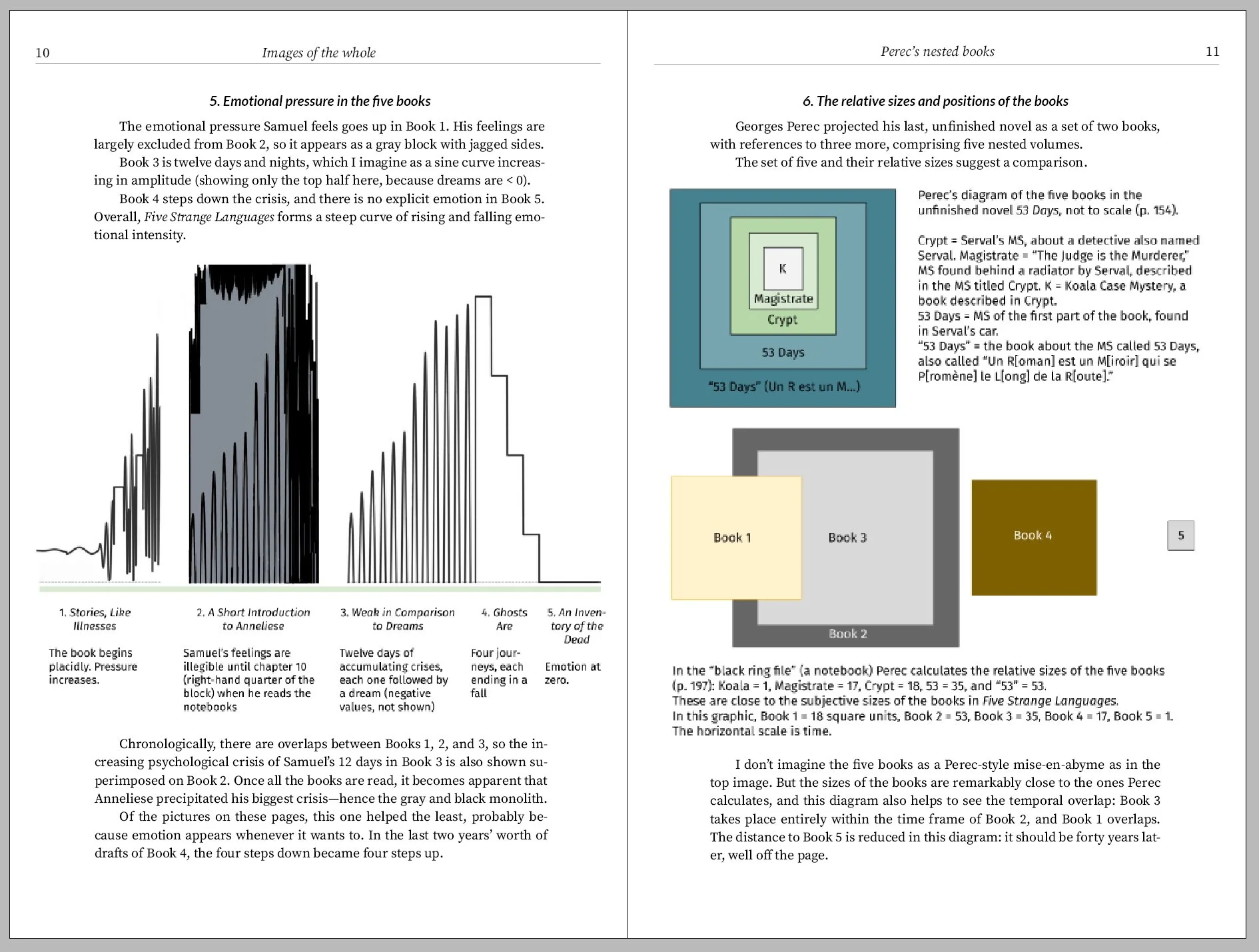 Image 2 of 4
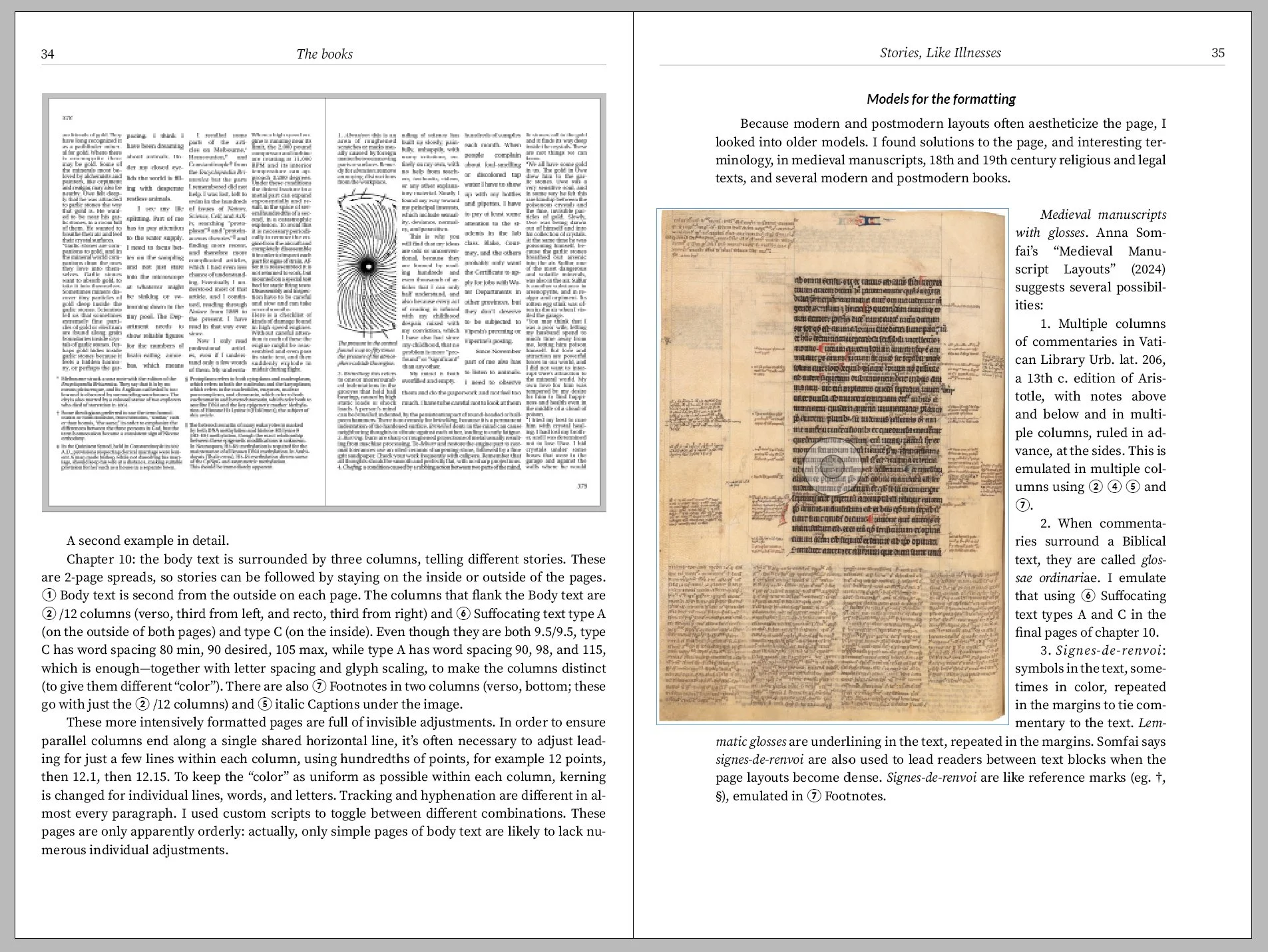 Image 3 of 4
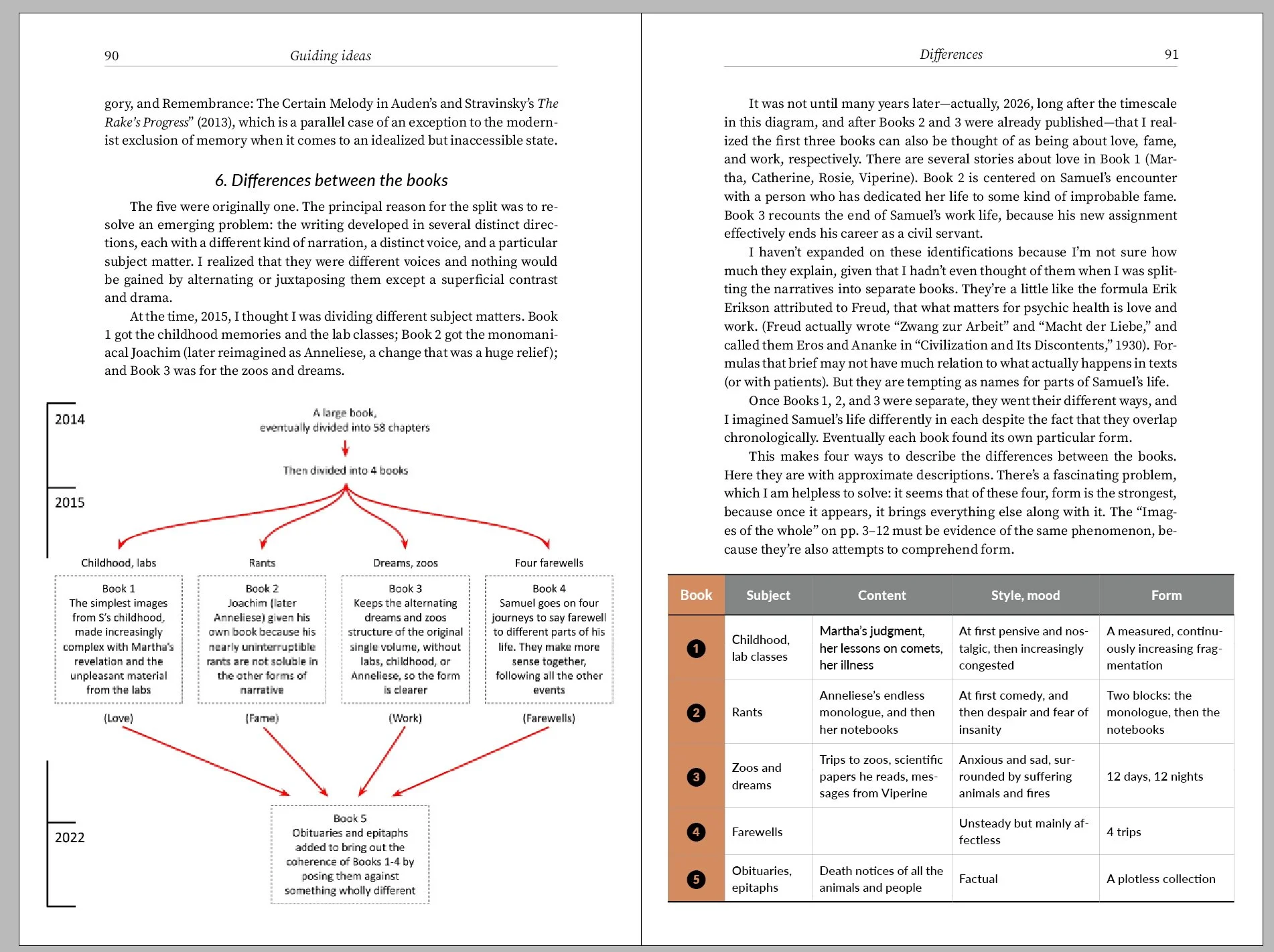 Image 4 of 4
Ideas and Materials for Five Strange Languages
James Elkins
Stories, Like Illnesses Publisher Exclusive! Preorder alongside Stories, Like Illnesses here.
Elkins began writing the guide Ideas and Materials twenty years ago, when Five Strange Languages was just getting started. Meant to be read alongside the novel, both as a guide and an invitation to explore the book’s themes and meanings, it sets out the contents of each of the three books that have appeared so far—Stories, Like Illnesses; A Short Introduction to Anneliese; and Weak in Comparison to Dreams—and it explores what they say about memory, aging, love, and many other topics.
Ideas and Materials opens with Elkins’s attempts to visualize the five volumes of Five Strange Languages. Several pages of color illustrations show the five books imagined as buildings (with Book 2 towering over the others), as seismographic tracings representing levels of emotion, as a timeline running through dark periods in the character’s life and emerging in the light. The cover design is a cross-section of the Atlantic Ocean: the books are imagined as a walk along the ocean floor, down to tremendous depths and back again to the surface at the end.
The book is primarily an unusual companion to the novel, but it can also be used for other purposes: as an introduction to some contemporary thinking about the novel, as a teaching aid, and as a guide for students.
For writing students
This book will introduce you to some of the most interesting unsolved problems in writing fiction, including the representation of other people’s minds, the question of whether a life is like a story, the problem of flat or absent affect, the principal forms that give coherence to long fiction, and the ways that writers have incorporated nonliterary material like science, technology, and business.
Ideas and Materials also touches on one of the most striking aspects of Elkins’s novel: the many photographs, drawings, spreadsheets, maps, and even sheet music, which take the contemporary novel toward an integration of visual material and literary narrative. The book offers explanations of the unusual formatting in Stories, Like Illnesses, and how writers can make use of multiple columns, marginal notes, and footnotes. It describes the choices of fonts and layout, which are different in each book; it explores the differences between writing in Word, on Google, or with InDesign; and it includes schemata that can help writers plan and organize their own large-scale writing projects.
For those who are interested in the state of contemporary literary fiction, Ideas and Materials is an unparalleled resource. It includes assessments of some currently popular forms such as autofiction, as well as revaluations of modernist classics from Joyce, Musil, and Stein to Robbe-Grillet, Gaddis, Markson, Perec, and Pynchon. Current writers including Cusk, Ellmann, Énard, Fosse, Murnane, Balle, Solstad, Ernaux, and others are considered for their positions in relation to the history of fiction. At the same time, Ideas and Materials introduces readers to an entire world of literary criticism and theory. Ideas and Materials engages over seventy recent and contemporary critics and historians who have been developing ideas about how narratives work, what novels can be like after postmodernism, and how writers represent people’s minds. From Lukacs to Genette, Jameson, Felski, Bewes, Ercolino, Fludernik, Mazzoni, and dozens more, the book is an introduction to the current understanding of the novel.
For teachers
The book can also serve as a teaching aid, providing basic information for students who need to keep their bearings: a timeline shows how the first three books overlap, and a QR code leads to a world map marking all the novel’s locations. Ideas and Materialsexplores issues raised by the novel—including fundamental problems of love, relationships, and work—told not in the neutral, authoritative voice of a textbook, but in the immediate, engaged voice of the author as he worked to understand the implications of what he was writing.
For writers
This is a personal account, recording the doubts and uncertainties that accompany any writing project. In parts, it offers guides and interpretations of elements in the novel, but it is also a record of the author’s doubts, the places where the writing got out of control, and the limits of any author’s understanding of their material.
In many ways, this work is unprecedented. Rather than a guide written after the fact, it acts as a parallel voice designed to stand in conversation with the novel. Together they create a new kind of writing: neither purely immersive, as most fiction wants to be, nor purely informational, like scholarship, but something in between. The idea is to upset the experience of fiction by mingling it, in the reader’s mind, with a different voice.
